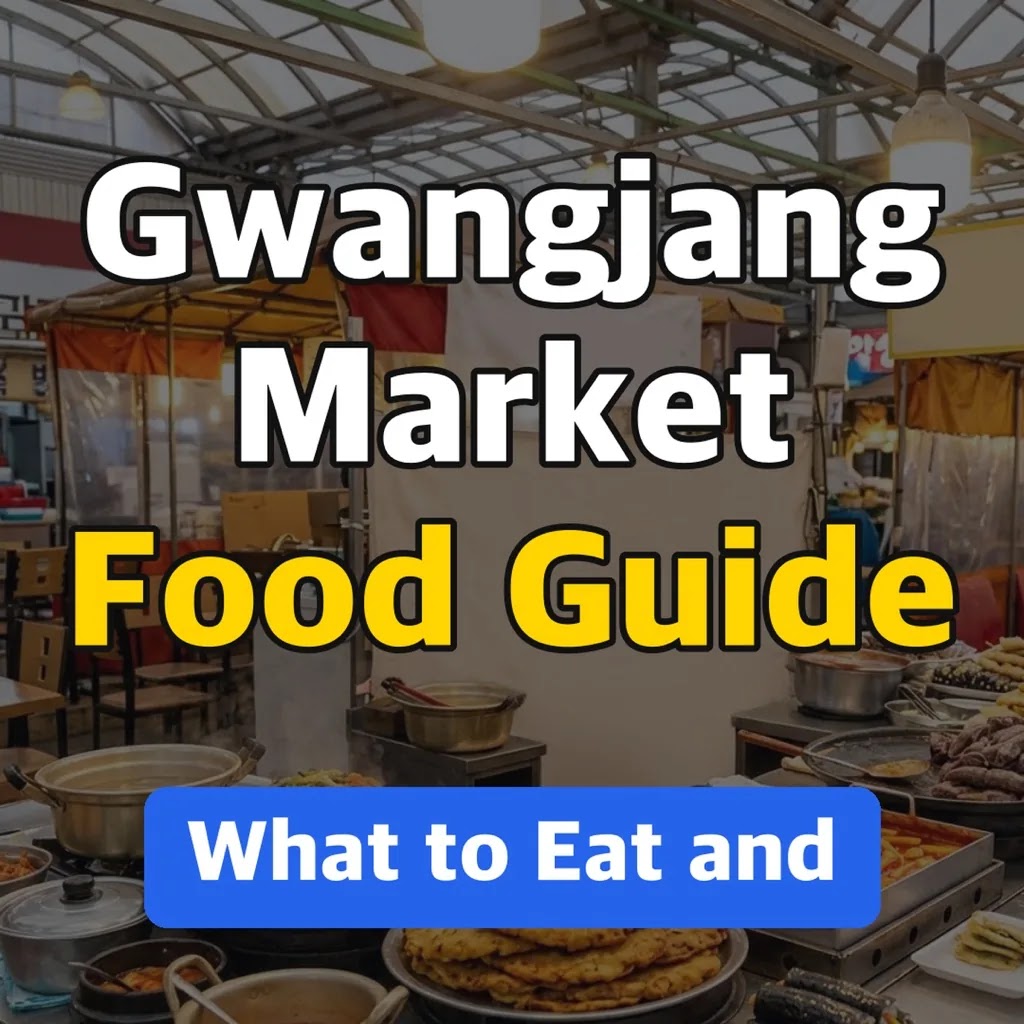
At Gwangjang Market, the must-eat dishes are bindaetteok (mung bean pancake), mayak gimbap, kalguksu (knife-cut noodles) and yukhoe (beef tartare). Most snacks cost about 3,000 to 10,000 KRW, and a snack tour runs roughly 12,000 to 18,000 KRW per person. Prices below are approximate and unconfirmed for 2026, so treat them as a guide.
- Place: Gwangjang Market (광장시장), 88 Changgyeonggung-ro, Jongno-gu, Seoul
- Hours: Sources conflict. Market hours are given as 8:30am to 6pm, restaurants as 8:30am to 11pm, and Time Out says 9am to 10pm. Stalls set their own hours.
- Budget: About 12,000 to 18,000 KRW per person for a snack tour, or 50,000 to 70,000 KRW for two with a full meal and drinks
- Nearest station: Jongno 5-ga Station (종로5가역), Line 1, about a one-minute walk
Why Gwangjang Market is a TV food spot
Gwangjang Market is a traditional market in central Seoul. Its food alley is famous for street food. Several stalls, especially the kalguksu vendor, appeared in Netflix's Street Food: Asia. That exposure is a big reason the alley draws so many visitors today.

No official Korea Tourism Organization (visitkorea) page was found for the market. The details here come from travel guides and a Seoul tourism guide site. The market's own site is www.kwangjangmarket.co.kr, but its content was not checked for this article. Confirm anything important there or on site.
What to eat and approximate prices
The prices below come from the Seoul Tourism food guide and are approximate. Time Out lists dishes at 4,000 to 10,000 KRW.
Snacks and light bites
- Bindaetteok (빈대떡): About 5,000 KRW. This is the signature dish of the market. Ask about pork before you order.
- Mayak gimbap: 3,000 to 4,000 KRW per tray. These are mini rolls served with a mustard-soy dip.
- Tteokbokki and sundae: 4,000 to 7,000 KRW.
- Jeon (savory pancakes): 5,000 to 9,000 KRW.
- Hotteok and bungeoppang: 1,000 to 2,000 KRW. These are sweet street snacks that work well as dessert.
Noodles and rice dishes
- Kalguksu (knife-cut noodles): 7,000 to 9,000 KRW. It is often vegetarian-friendly, but check the broth first.
- Sundae gukbap: 8,000 to 10,000 KRW.
- Mung bean sprout bibimbap: 8,000 to 9,000 KRW.
- Mul-naengmyeon: Also on sale, but no price was found.
Bigger plates and drinks
- Yukhoe (beef tartare): 18,000 to 25,000 KRW, and up to about 30,000 KRW at some stalls.
- Bossam: 22,000 to 30,000 KRW.
- Jokbal (pork hock): Also on sale, but no price was found.
- Soju: About 4,000 KRW per bottle.
How to get there
- Take Line 1 to Jongno 5-ga Station. The market is about a one-minute walk from the station.
- Choose your exit. Guides disagree: Exit 7 is named by Soul of Seoul and the Seoul Tourism guide, while Exit 8 is named by Time Out and the Seoul Tourism guide. Check the signs on site.
- Alternatively, take Line 2 or Line 5 to Euljiro 4-ga Station (을지로4가역) and use Exit 4, as two sources say. The walk is about 7 minutes.
- Look for the Cheonggyecheon Stream (청계천), which runs beside the market. It is a handy landmark if you get turned around.
Opening hours and closures
Sources do not agree on hours. The official market hours are given as 8:30am to 6pm, and restaurants as 8:30am to 11pm (Soul of Seoul). Time Out says 9am to 10pm. Food stalls set their own hours, and many open by late morning.
Fabric and hanbok shops close on Sundays. Most stalls also close on Sundays, and some close on Mondays. Closures during Seollal and Chuseok are likely. If you plan to visit near a holiday, check the market's official site first.
Tips for a smoother visit
- Bring cash. Many older stalls do not take cards.
- Time your visit. One guide says weekday afternoons, about 2pm to 5pm, are quieter. Another suggests weekday midday, or around 10am on weekends. Weekend afternoons are the busiest.
- Ordering is easy. Many stalls have multilingual menus, and pointing at the food works too.
- Look for free broth. Eomuk (fish cake) stalls often serve free anchovy broth.
- Skip very long lines. If a line is longer than about 30 minutes, move on. Nearby stalls are similar.
- Dress for the floor. Floors can be oily and napkins are unreliable, so wear sturdy shoes and carry tissues.
- Restrooms: Public restrooms are at the south and east entrances.
- Take a break. A Starbucks on the second floor, opened in May 2025 according to Soul of Seoul, gives access to a rooftop.
- Skip live octopus here. One guide says sannakji is better eaten at Noryangjin Fish Market.
Sample budgets
A snack tour of several small dishes should come to roughly 12,000 to 18,000 KRW per person. A sit-down meal for two, with a full spread and drinks, is about 50,000 to 70,000 KRW. A simple route could be bindaetteok, a tray of mayak gimbap, a bowl of kalguksu and a sweet hotteok to finish. Add yukhoe or bossam if you want a bigger meal, but expect the total to rise.
The Time Out guide to Gwangjang Market is another useful reference for what to order.
FAQ
What is the one dish to try at Gwangjang Market?
Bindaetteok is the signature dish, at about 5,000 KRW. If you also want something warm and filling, kalguksu is the stall that appeared in Netflix's Street Food: Asia, at about 7,000 to 9,000 KRW.
Is Gwangjang Market good for vegetarians?
Options exist, but care is needed. Kalguksu is often vegetarian-friendly, but check the broth. Ask about pork in the bindaetteok before ordering. Many stalls have multilingual menus, and pointing at food works if there is a language barrier.
Can I pay by card?
Not always. Many older stalls do not take cards, so bring cash.
When is the best time to go?
Guides differ slightly. One recommends weekday afternoons, about 2pm to 5pm. Another suggests weekday midday, or around 10am on weekends. Weekend afternoons are the busiest. Remember that most stalls close on Sundays and some on Mondays.
Sources: Seoul Tourism - Gwangjang Market Food Guide · The Soul of Seoul - Gwangjang Market · Time Out Seoul - Gwangjang Market
Comments
Post a Comment